10 Nigerian Markets You Never Knew You Could Shop From Online
10 Nigerian Markets You Never Knew You Could Shop From Online
Published September 26, 2026 · 7 min read · Market Guides
For decades, the rule in Nigerian shopping has been simple: if you want the best prices, the best quality, and the most variety, you go to the market. Not a mall. Not a supermarket. The actual, sweating, bargaining, shouting, alive market.
The problem has always been getting there.
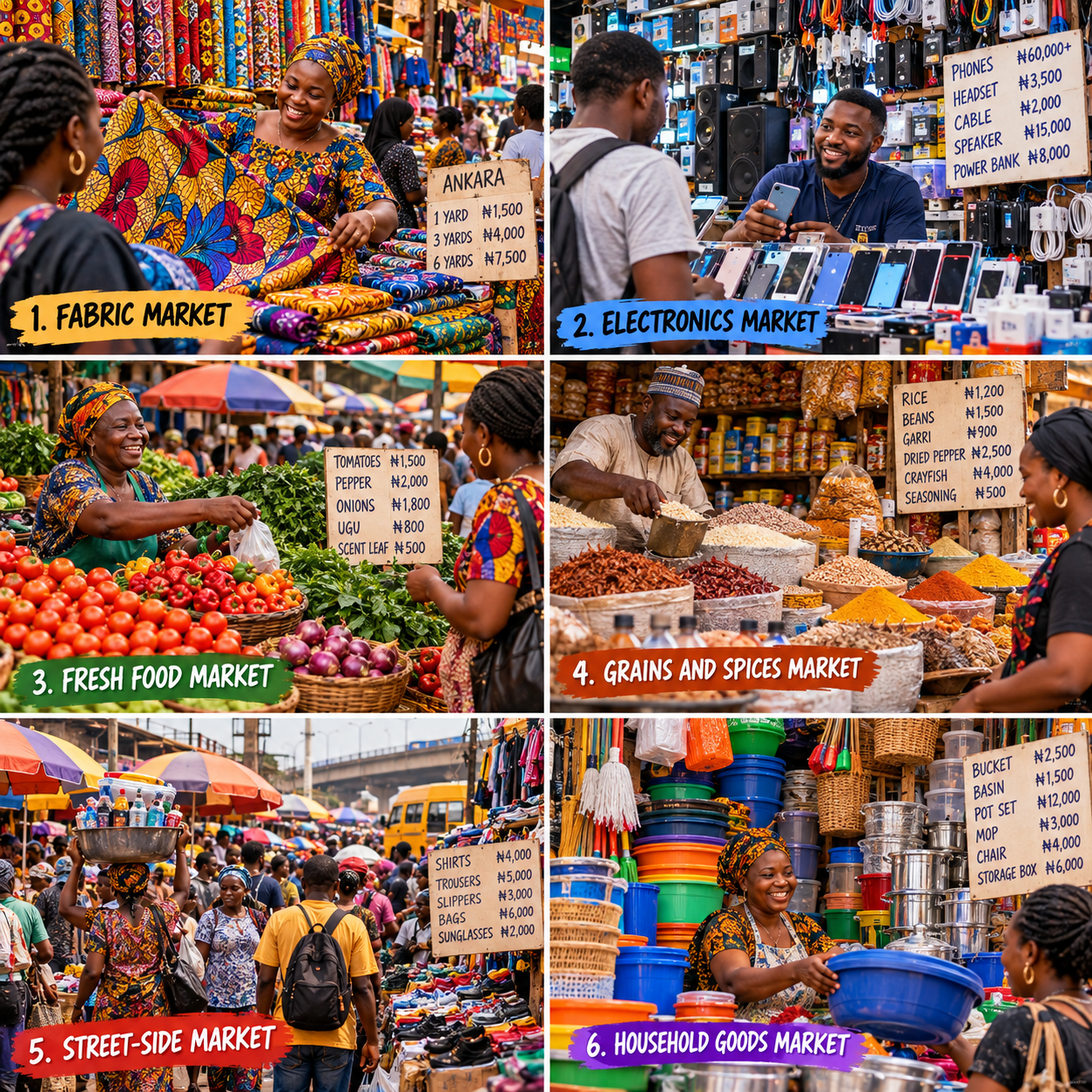
KlosaMart changes that rule. Below are 10 Nigerian markets now on the platform — what they are famous for, why they matter, and how to shop from them without leaving your home.
1. Balogun Market, Lagos Island
One of the largest markets in West Africa, Balogun is the definitive destination for fabric, fashion, and ready-to-wear clothing in Nigeria. If you are looking for ankara, aso-oke, adire, lace, or tailoring materials in any quantity and at any price point, Balogun has it. Vendors here supply retailers across Nigeria. Now they supply you directly, online.
Shop for: Fabrics, fashion, accessories, shoes, bags.
2. Ariaria International Market, Aba
Nigeria's leather capital and one of the most celebrated manufacturing markets on the continent. The craftsmen of Ariaria produce shoes, bags, belts, and wallets that have found their way to markets across Africa and Europe. Buying directly from Ariaria vendors through KlosaMart means getting Aba-quality leather goods at Aba prices.
Shop for: Leather shoes, bags, belts, wallets, bespoke footwear.
3. Computer Village, Ikeja, Lagos
The largest open-air technology market in Africa. If it has a circuit board, a screen, or a USB port, someone in Computer Village sells it. The market is also the hub for repairs, accessories, and refurbished devices at prices that consistently undercut retail stores. For Nigerians who know, Computer Village is where you go before anywhere else for electronics.
Shop for: Phones, laptops, accessories, electronics, cables, chargers, refurbished devices.
4. Kano Central Market
One of the oldest and most historic markets in West Africa, Kano Central has been a centre of trans-Saharan trade for centuries. Today it is a sprawling market of leather goods, crafts, spices, grains, and textiles that represents the breadth of Northern Nigerian trade culture. Shopping here through KlosaMart connects buyers to a trading tradition that predates modern Nigeria itself.
Shop for: Leather goods, crafts, spices, grains, fabrics, traditional items.
5. Onitsha Main Market, Anambra
By volume, Onitsha Main Market is arguably the largest market in Africa. It is a wholesale and retail hub for goods across virtually every category — from electronics and pharmaceuticals to food, clothing, and household goods. Onitsha prices are famous for their competitiveness. The market serves as a distribution centre for much of the South-East and beyond.
Shop for: Almost everything — electronics, household goods, food items, clothing, pharmaceuticals.
6. Gbagi Market, Ibadan
The heart of Ibadan's textile trade and one of the most important fabric markets in the South-West. Gbagi is where fashion designers, tailors, and fabric enthusiasts from across Oyo and neighbouring states come to source materials. The variety of fabrics — local and imported — is staggering.
Shop for: Fabrics, lace, ankara, aso-oke, brocade, imported textiles.
7. Mile One Market, Port Harcourt
Rivers State's most famous market, Mile One is a general merchandise hub known for food, household goods, and fashion at South-South prices. It serves as a commercial anchor for Port Harcourt's dense urban population and connects oil-city consumers to traders from across the region.
Shop for: Foodstuff, household items, fashion, provisions.
8. Wuse Market, Abuja
One of the largest and most diverse markets in the Federal Capital Territory. Wuse Market has grown alongside Abuja itself and now hosts vendors selling everything from fresh produce and provisions to electronics, clothing, and household goods. It is the market most Abuja residents default to for everyday needs.
Shop for: General merchandise, foodstuff, fashion, electronics, provisions.
9. Sabon Gari Market, Kano
One of Kano's busiest commercial hubs, Sabon Gari serves as a melting pot of traders from across Nigeria. It is particularly well known for food items, provisions, and everyday household goods — stocked at Northern Nigeria's famously competitive wholesale prices.
Shop for: Provisions, foodstuff, household goods, clothing.
10. Bodija Market, Ibadan
Ibadan's premier fresh produce market. Bodija is where the South-West's food supply chain begins — palm oil, yams, vegetables, grains, and livestock all pass through here at farm-gate prices that supermarkets cannot touch. If you are a buyer who cooks, Bodija on KlosaMart is where you shop.
Shop for: Fresh produce, palm oil, grains, vegetables, foodstuff.
Every market on this list has been a destination for Nigerians who knew where to go. Now every Nigerian knows — and can shop there from anywhere in the country.
How to Shop from Any of These Markets
- Visit klosamart.com
- Search by market name, state, or product category
- Browse vendor listings and place your order
- A registered dispatch rider picks up and delivers locally
- Pay securely on the platform
It takes less time than finding a parking space at your local mall.
🏪 Browse all markets on KlosaMart — klosamart.com