The Nigerian Market Woman Is Going Digital — And It Is Changing Everything
The Nigerian Market Woman Is Going Digital: Here Is How It Changes Everything
Published August 15, 2026 · 5 min read · Market Insights
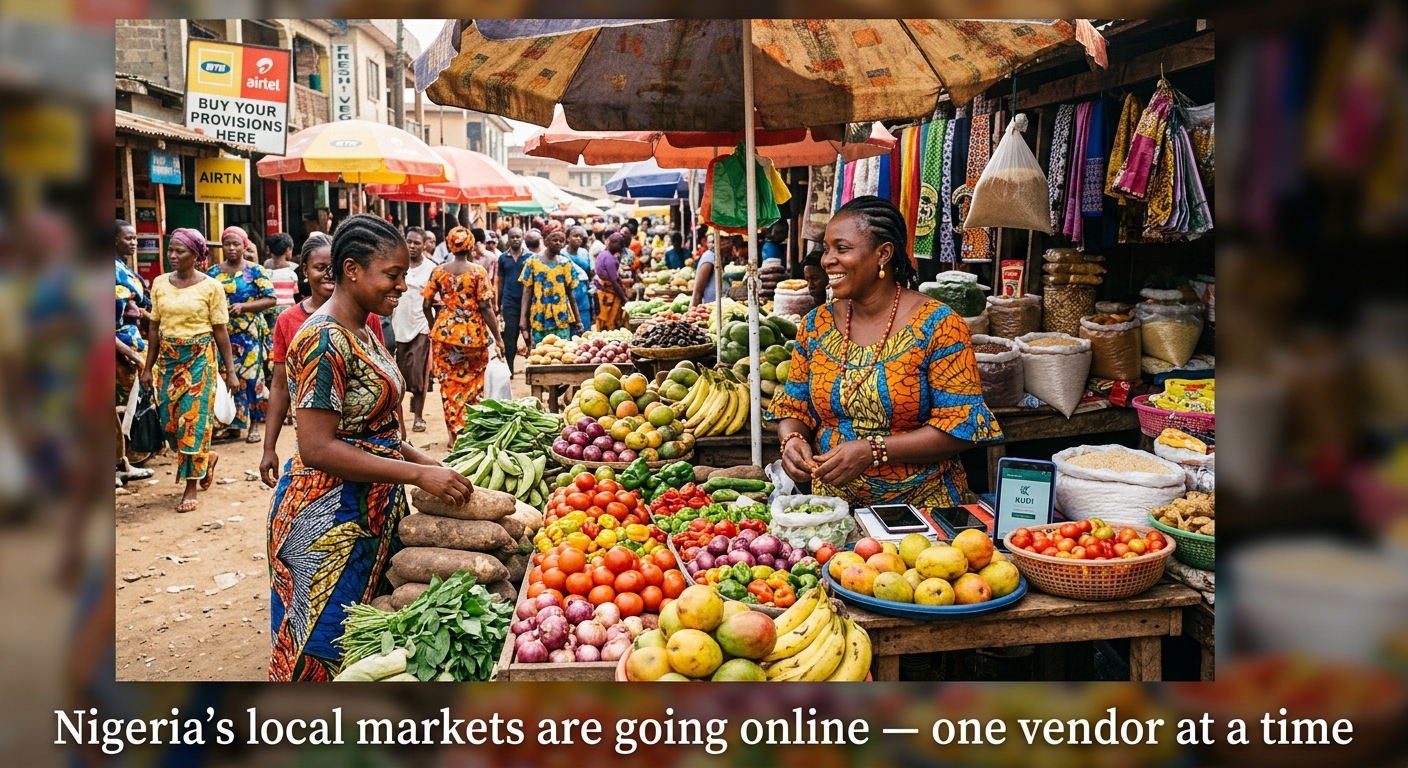
She arrives before sunrise. Her stall is set up before most of Lagos is awake. By the time traffic begins to snarl on the bridge, she has already sold her first batch of tomatoes, shouted at two customers who wanted to pay less than the pepper was worth, and settled into the rhythm that has defined her mornings for fifteen years.
She knows her trade better than anyone. She knows which suppliers deliver fresh stock and which ones try to offload yesterday's. She knows how to negotiate, how to read a customer, how to stretch a small capital into a full day's profit.
What she has not had until now is a digital address.
Over 56% of Nigerian MSMEs sell exclusively through social media. The local market trader, which is arguably Nigeria's most experienced retailer, has been largely left out of the digital commerce story. Klosamart is changing that.
The Gap That Has Always Existed
Nigeria's e-commerce story, as it has been told over the past decade, has largely been a story about warehouses, catalogues, and imported goods. Jumia. Konga. Jiji. These are Valuable platforms, no doubt, but they are built around a vision of commerce that does not look like the Balogun Market fabric seller, or the Ariaria shoe maker, or the Kano grain merchant.
Those traders, making up the backbone of what economists estimate is a 55–65% share of Nigeria's GDP, have operated brilliantly for decades without being part of the digital economy. Not because they lack the product, the skill, or the customers, but because no one built the right platform for them.
The requirements for listing on most e-commerce platforms assumed a business that could photograph products against white backgrounds, write SEO-optimised descriptions, manage a dashboard, and handle logistics through a national courier. That is a different kind of business from what thrives in the markets of Onitsha, Oshodi, and Wuse.
What Changing Looks Like
The shift, when it comes, does not look dramatic from the outside. It looks like a fabric seller in Anambra taking a photograph of her ankara stock on her phone. It looks like a spare parts vendor in Computer Village, Ikeja, typing in his prices. It looks like a pepper seller in Bodija Market, Ibadan, receiving a notification that someone in Ikorodu has placed an order.
It looks, in other words, like exactly what these traders have always done — with one addition: a platform that connects them to buyers beyond the reach of their street.
Klosamart was built around this reality. Vendors register within their actual local market; which is essentially the market where they trade every day. Buyers search by market, by state or by products. Dispatch riders within the same city pick up and deliver. The structure honours the way local trade actually works, rather than asking traders to conform to a model designed for a different kind of business.
Why This Matters Beyond Commerce
When local market vendors go digital, something important happens beyond the individual sale. Their businesses become visible to researchers, to policymakers, to lenders. A foodstuffs seller who has turned over ₦10 million in annual sales for a decade has no credit history, because her business has been largely invisible to financial institutions. The moment she has a platform transaction record, that changes.
The aggregated data of thousands of local vendors also, for the first time, begins to tell the true story of informal Nigerian commerce, not based on estimates and surveys, but actual transaction data from actual traders in actual markets.
The market woman who was always the engine of local commerce is now, slowly, also becoming visible in the digital economy she was always powering.
What Buyers Gain
For the person on the other side of the transaction: the buyer, who has spent years either making the trip to market themselves or sending an unreliable proxy, the shift is equally significant.
Being able to search for a specific fabric from a specific market in a specific state, compare prices between three vendors, and have it delivered to your door is not a luxury. In a country where the average commute in Lagos alone can consume two to three hours of a working day, it is a genuine quality-of-life improvement.
The Nigerian market has always had what buyers want. The problem has always been access. Klosamart closes that gap, one market at a time.
The best local markets in Nigeria have always been some of the best places to shop in the world. Now they are also some of the easiest.
Join the Movement
Whether you are a vendor ready to take your stall online, a buyer tired of the Saturday market run, or someone who wants to earn by connecting traders to the platform — Klosamart is where you belong.
🛒 Browse Nigerian markets online at klosamart.com